THE MEASURE OF A SAINT AND A SCHOLAR-PASTOR: A Sermon Preached at the Ordination of Rev. Dr. Adeboye Godwin and Mrs. Lois Adeboye at ECWA Ganmo on Sunday, 3rd August, 2025 by Babatomiwa M. Owojaiye

INTRODUCTION
As we gather to witness the ordination of Dr. Godwin Adeboye, a servant committed to godly character and academic excellence, we are reminded of what true ministry should represent. This moment is more than ceremonial—it’s prophetic. It calls us, especially the rising generation of Christian academics and pastoral practitioners, to return to the enduring values that shape the Church’s moral credibility.
Yet today, there’s a troubling erosion taking place in the soul of Christian ministry. Ecclesiologically and theologically, we must confront the uncomfortable reality: a swelling tide of self-proclaimed prophets and pastors whose ministries thrive on spectacle but starve on substance. Their rising media visibility may amplify their voices, but it diminishes the voice of the Church in the public square.
The values that once distinguished servants of God—humility, compassion, selflessness, servant leadership—are increasingly abandoned for pursuits of personal brand, wealth accumulation, and unchecked influence. A frugal lifestyle and generosity, once hallmarks of godly leaders, are now overshadowed by a theology that equates material prosperity with spiritual legitimacy.
This is not merely a crisis of doctrine—it’s a crisis of identity. And for you, young scholars walking the fine line between head knowledge and heart transformation, the challenge is clear: Will you reflect Christ, or simply project success?
As we celebrate Dr. Adeboye’s ordination, let it also serve as a clarion call. The Church needs voices that are both intellectually sound and morally anchored—academics who rise not by replacing character with credentials, but by making character the foundation of their influence.
And so, as we stand at this intersection of consecration and conviction, the question now is not just who we celebrate, but what we cultivate. Today is not merely about recognizing Dr. Godwin Adeboye’s calling, but about challenging all of us—especially the rising generation of Christian academics and pastors—to examine the kind of legacy we are building. If the Church must remain credible in the public square, then our pulpits and lecture halls must begin to overflow with character, humility, and diligence. These are the pillars upon which real transformation is built—not charisma or credentials alone. It is in this spirit that I invite us to reflect on three pressing calls that must define our journey going forward.
EXPOUNDING THE CALL FOR GODLY CHARACTER BEYOND HEAD KNOWLEDGE*
In our age of rising scholarship and academic sophistication, we must not lose sight of the truth that knowledge is not virtue. The Apostle Paul warned in 1 Corinthians 8:1 that *"knowledge puffs up, but love builds up."* An abundance of theological insight or intellectual acclaim does not automatically yield godliness. The danger lies in mistaking cognitive mastery for spiritual maturity—yet the two are not synonymous. We are called not just to know about God, but to know Him through transformed character.
Jesus modeled this perfectly when He declared in Matthew 11:29, *"Take my yoke upon you and learn from me, for I am gentle and humble in heart."* His invitation was not to a lecture hall, but to a life of humility, submission, and Christlike love. True spiritual leadership is marked by the fruit of the Spirit in Galatians 5:22–23—love, joy, peace, patience, kindness, goodness, faithfulness, gentleness, and self-control. These are not achieved through mental rigor but through surrender to the sanctifying work of the Holy Spirit.
As Dietrich Bonhoeffer famously said, "Only he who believes is obedient, and only he who is obedient believes." Knowledge must lead to obedience; otherwise, it becomes hollow. The future of ministry—particularly among Christian intellectuals—hinges on this marriage of wisdom and virtue. We must raise a generation whose degrees and diplomas serve as platforms for truth and compassion, not pride and entitlement. Let this ordination rekindle in us the desire to become deeply principled Christians, not merely well-informed ones.
CHRISTIAN ACADEMICS ARE CALLED TO HUMILITY
In the pursuit of intellectual excellence, Christian scholars must heed the call to radical humility—not as a denial of intelligence, but as a reflection of Christlikeness. Philippians 2:5–8 exhorts us: *"Let this mind be in you, which was also in Christ Jesus... who humbled Himself and became obedient to death—even death on a cross."* The Son of God, though omniscient, chose humility over applause, obedience over popularity.
Let us be clear: humility is not stupidity. It is wisdom wrapped in grace. It doesn’t suppress your brilliance; it sanctifies it. Academic pride often whispers that you must prove yourself, defend every position, and never be seen as unsure. But the Spirit of Christ teaches us to "not think of ourselves more highly than we ought" (Romans 12:3), reminding us that every insight we possess is a stewardship—not a throne.
Christian humility empowers academics to speak truth boldly, yet remain teachable; to lead in thought, yet yield to God’s Word. Augustine once said, "It was pride that changed angels into devils; it is humility that makes men as angels." Let us never allow our intellect to become an idol. Instead, let our humility be a testimony—that we are not only learned, but led by the Spirit.
This calling is not a soft virtue—it’s a sharp discipline. It challenges every ego in the classroom, every ambition in the pulpit, and every temptation to weaponize intelligence. In this generation, the most powerful witness of Christian academia may not be another brilliant paper or lecture—it may be the scholar who kneels before God and serves others.
TODAY'S ORDINATION IS A CALL TO DISCIPLINE, DILIGENCE, AND EXCELLENCE
The Church today stands at a critical juncture—especially in Africa—where the call to academic excellence is no longer optional, but urgent. In an era where knowledge defines influence, the Christian scholar must become more than a custodian of sacred truth—they must be active contributors to the intellectual landscape. Ecclesiastes 9:10 urges us: "Whatever your hand finds to do, do it with all your might," and for those who have received the gift of scholarship, this mandate demands rigorous engagement, not just ceremonial achievement.
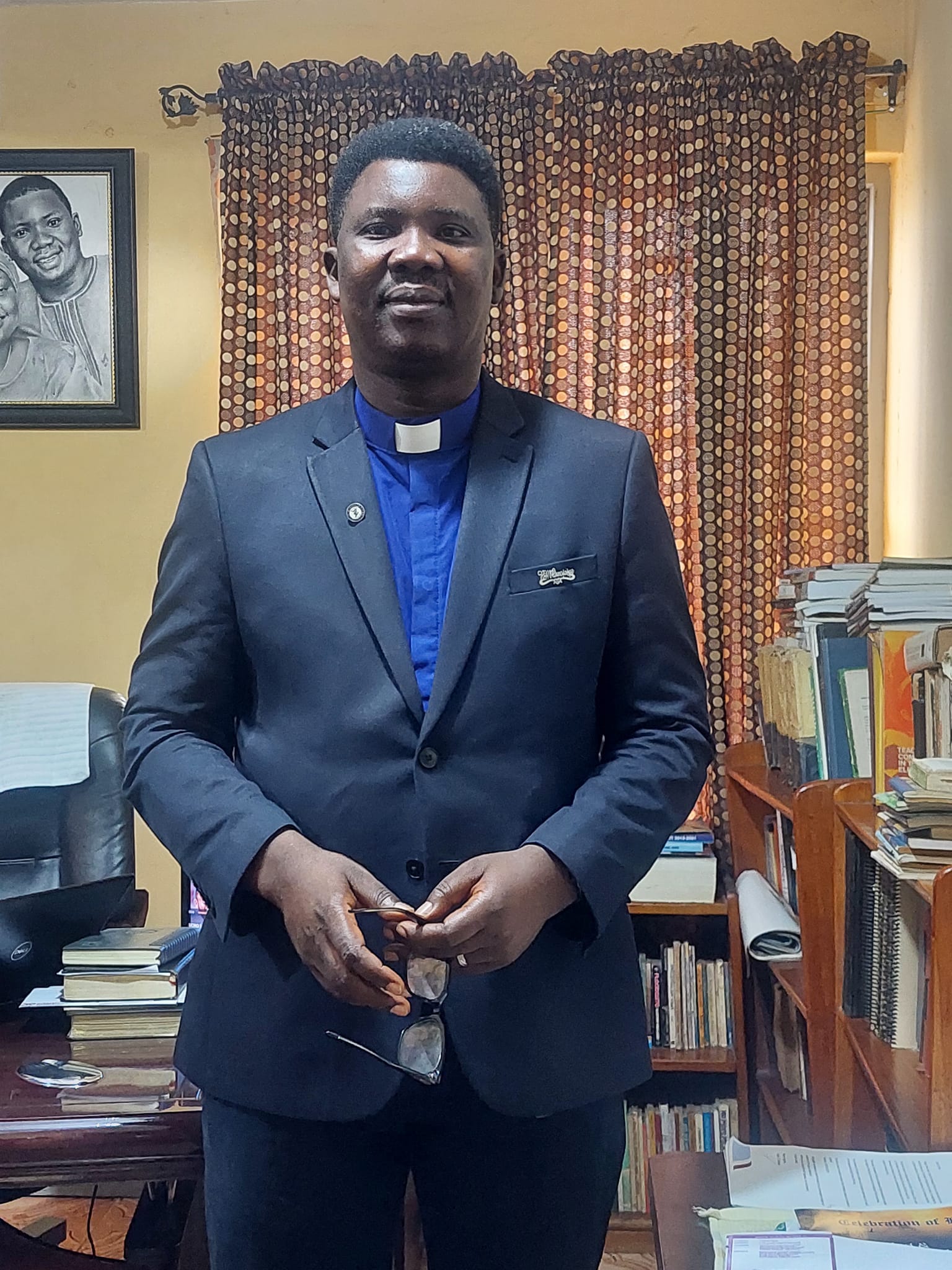
We are gathered to honor Rev. Dr. Godwin Oriyomi Adeboye and his wife, Lois Adeboye, whose lives reflect deep devotion to the Church and to the world of learning. Their pedagogical and literary contributions are commendable and far-reaching. Yet the truth must be told: this is only the beginning. Excellence is not a destination—it is a discipline. And in their hands—and in the hands of those like them—lies a continent's academic awakening. Africa lags behind in the global production of knowledge, and the Church must rise to become a catalyst for intellectual transformation.
Far too many Christian academics pursue doctoral studies as a final accolade, rather than an open door. With diploma in hand, they retreat into silence—no publications, no conferences, no mentoring, no intellectual labor. It is as though the degree were the death of inquiry, not the birth of greater vision. This is not excellence; it is apathy disguised as arrival. Worse still, a creeping complacency has confined some theological educators into academic cocoons, where they publish without peer review, teach without challenge, and grow without stretching. Their voices echo only in the chambers they built for themselves.
Let it be said: self-publishing is not the enemy—but unaccountable scholarship is. Paul’s charge to Timothy was not merely to preach, but to *"study to show yourself approved, a worker who does not need to be ashamed"* (2 Timothy 2:15). Workers. Not spectators. The Church needs men and women whose pens are soaked in truth, whose research wrestles with complex realities, and whose writing pushes boundaries—not just minds.
We must call forth academics who see publication not as vanity, but as ministry. Christian excellence means bearing burdens—especially intellectual ones—not for personal accolades but for kingdom influence. It means mentoring a generation of scholars who write with precision, teach with passion, and build libraries of ideas that reflect the glory of God and the dignity of our continent.
So today, let this ordination challenge not only Godwin but all of us—those in seminaries, pulpits, classrooms, and libraries. We must do more. We must press forward. The mantle of academic renewal has not been laid down; it is waiting to be claimed by those who will labour well, publish with integrity, and shape the soul of Africa’s Church through godly scholarship.
CONCLUSION
And now, as we close this sacred reflection, let us return to one of the most profound testimonies ever uttered in Scripture—not in a sanctuary, not at an ordination, not in the presence of prophets—but in a bedroom. In 2 Kings 4:9, the Shunammite woman said quietly to her husband, *"Behold now, I perceive that this is a holy man of God who passes by us continually."*
She had watched Elisha—not in sermons, not in crusades—but in the daily passing moments. No flashing miracles, no public announcements. Just quiet consistency. The revelation wasn’t born from charisma—it was birthed from character. This woman discerned holiness not from what he said, but from who he was.
We must ask ourselves: what do people say about us in the privacy of their homes? Not in the applause of ordination services, but in the hushed assessments of their hearts. Are we just men of God by title, or are we holy men of God by truth?
Elisha didn't inherit his mantle by default—he burned his past, followed Elijah, and lived with sacrifice. In contrast, Gehazi—his supposed successor—was undone by greed, leaving behind not legacy but leprosy. Same lineage. Same training. Vastly different destinies. The difference? Character.
So today, let this ordination not only honor the journey of Dr. Godwin Adeboye and Lois Adeboye, but ignite a deeper reckoning in every Christian scholar, pastor, and believer. It is your labor and your character—both in public and in private—that will determine how history and heaven record your story. Will you be remembered as a vessel of honor or a cautionary tale?
The ultimate test of ministry is not in the titles we bear, but in the lives we live—marked by private holiness and public integrity. God is still looking for holy men and women of God—those whose names may never trend but whose lives leave a trail of light in every soul they touch. Let’s bear in mind that we would give account of our lives and stewardship to God someday. May the testimony spoken in bedroom whispers be our loudest affirmation. May our excellence be forged in humility. And may our legacy be worthy of the double portion we ask for.
Let the Church arise. Let the pen be sharpened. Let the soul be pure. Amen!
Comments
Post a Comment